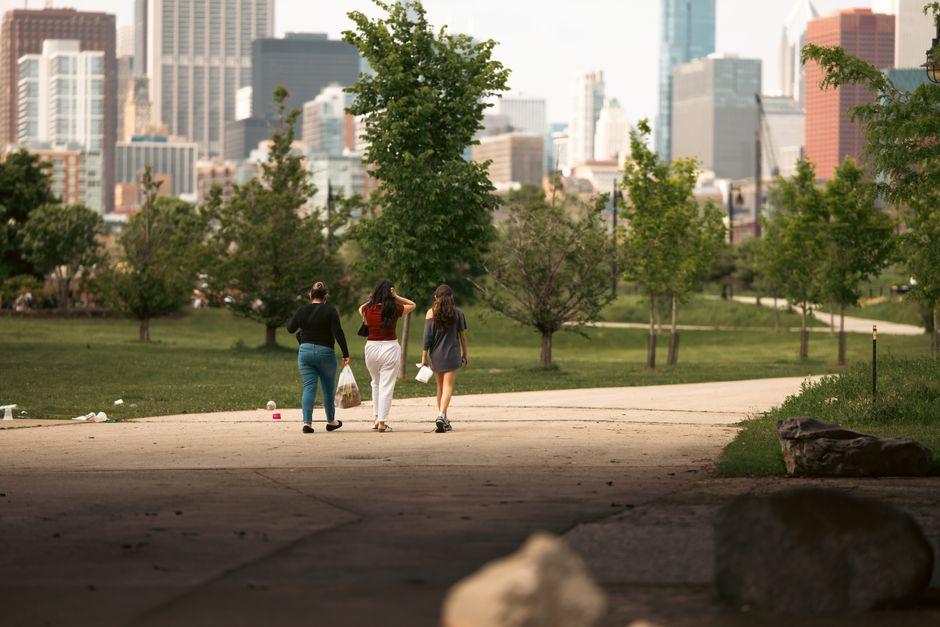
The thermometer hit 94°F at Midway Airport on Tuesday, but the real number that matters is 104 — that's the heat index recorded along the lakefront near Navy Pier, where humidity off Lake Michigan compounds the danger for anyone spending more than 20 minutes outside. The Chicago Department of Public Health has already logged 11 heat-related emergency room visits since June 28, a figure that typically spikes sharply heading into the July 4th weekend.
This matters right now because Chicago's summer heat pattern is particular. The city doesn't bake dry like Phoenix. It steams. Relative humidity regularly sits above 70 percent from late June through August, which means sweat doesn't evaporate efficiently and the body works harder to cool itself. Residents who moved here from drier climates often don't realize they're dehydrated until symptoms — headache, dark urine, muscle cramps — are already advanced. Add a holiday weekend of outdoor festivals, rooftop bars, and lakefront recreation, and the conditions for widespread dehydration are nearly ideal.
What Chicago's Heat Actually Does to Your Body
The standard eight-glasses-a-day guidance doesn't hold up in this climate during July. The National Academy of Medicine sets baseline adequate intake at roughly 3.7 liters daily for men and 2.7 liters for women — and that's for sedentary adults in temperate conditions. Spend two hours at the Taste of Chicago at Grant Park, which runs through July 12 this year, and you can sweat out more than a liter per hour without feeling it. Recreational cyclists on the 18-mile Lakefront Trail between Ardmore and 71st Street are particularly vulnerable; the lake breeze creates a false comfort that masks fluid loss.
Electrolytes are the piece most people skip. Sweat isn't just water — it carries sodium, potassium, and magnesium out of the body. Replacing fluid with plain water alone during heavy outdoor activity can dilute sodium levels, causing hyponatremia, a condition that mimics dehydration but is actually the opposite problem. Sports medicine practitioners generally recommend electrolyte supplementation for any outdoor activity lasting longer than 60 minutes in heat above 85°F. Coconut water, low-sugar electrolyte tablets, and even a simple pinch of salt added to a water bottle are all practical options. A 32-tablet tube of Nuun Sport electrolyte tablets retails for about $9 at most Chicago Walgreens locations and dissolves in 16 ounces of water.
Where to Hydrate Smart Across the City
Chicago has genuine infrastructure for this. The Chicago Park District operates over 250 drinking fountains across its network, and this summer the district expanded its cool-mist stations at Millennium Park and Humboldt Park — both open daily from 9 a.m. to 8 p.m. through Labor Day. The city's 24-hour cooling centers, including the Chicago Cultural Center at 78 E. Washington Street and the Harold Washington Library on South State Street, are air-conditioned and free to enter, no purchase required.
On the nutrition side, several Pilsen and Logan Square restaurants have added agua fresca programs this summer — house-made drinks blending hibiscus, tamarind, or cucumber with water and a small amount of natural sugar, which provides modest carbohydrate for energy alongside hydration. La Paloma Taqueria on West 26th Street in Pilsen has been selling 24-ounce hibiscus agua fresca for $4 since Memorial Day weekend. It's not a medical supplement, but it's a far better choice than a 20-ounce sweetened soda, which can actually slow gastric emptying and delay fluid absorption.
The practical calculus for the July 4th weekend is simple: drink before you're thirsty, not after. Thirst is a lagging indicator — by the time the brain registers it, the body is already about 1 to 2 percent dehydrated, enough to impair concentration and physical performance. Aim for pale yellow urine as a baseline check. Pre-hydrate with 16 ounces of water 30 minutes before heading to any outdoor event. If alcohol is part of the celebration — and for many Chicagoans it will be — match every drink with an equal volume of water. Anyone with a chronic health condition, the elderly, or young children should check in with a primary care provider before extended outdoor exposure; the Cook County Department of Public Health's nurse hotline at 708-633-4000 is staffed through the holiday weekend.
This article was compiled by AI and screened before publishing. See our editorial standards.