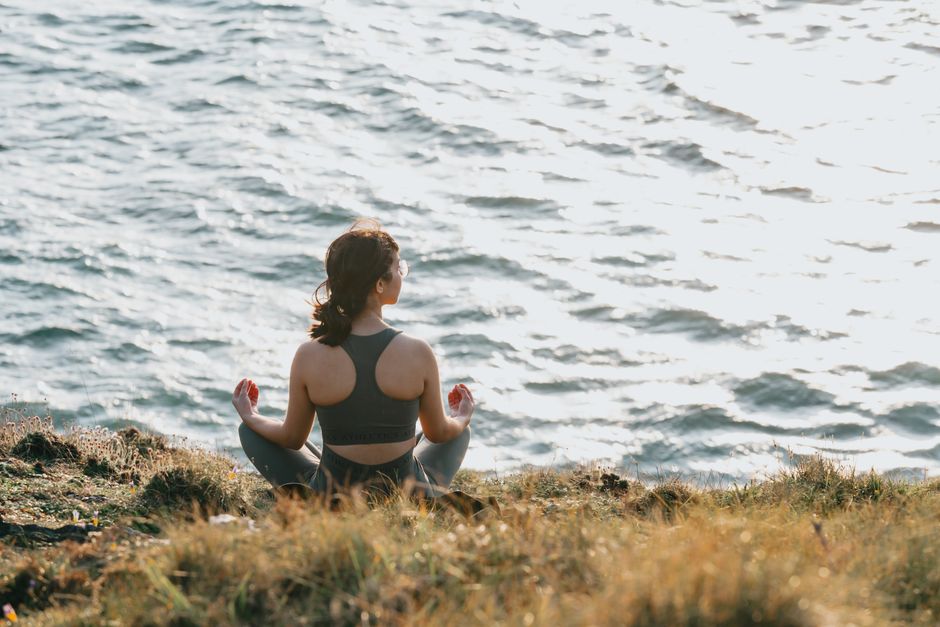
More Americans practiced meditation in 2025 than at any point in recorded survey history, with the Centers for Disease Control and Prevention reporting that roughly 17.3 percent of U.S. adults meditated regularly last year — up from just 4.1 percent in 2012. Chicago is no exception. Walk through Wicker Park on a Tuesday morning and you'll find studio doors propped open before 7 a.m., drop-in classes filling up, and a quiet but unmistakable appetite for something slower.
The timing makes sense. Workplace burnout surveys have tracked rising stress levels across urban centers since 2023, and the question of what to do when passion drains out of daily life — a tension many professionals recognize viscerally — has pushed mental wellness higher on the priority list. Meditation keeps surfacing as one of the few interventions with a substantial body of peer-reviewed support behind it, including a widely cited 2014 JAMA Internal Medicine meta-analysis that found mindfulness-based programs produced moderate improvements in anxiety, depression and pain. The research hasn't gotten weaker since.
Where to Start in Chicago
The good news is that Chicago has infrastructure most cities don't. The Shambhala Meditation Center of Chicago, located at 1023 W. Belmont Ave. in Lakeview, runs an Introduction to Meditation program specifically designed for people who have never sat before. Sessions run roughly 90 minutes and are donation-based, making the financial barrier close to zero. The center draws from a Tibetan Buddhist lineage but keeps beginner programming secular and technique-focused.
On the North Side, the Zen Life and Meditation Center in Lincoln Park offers a Sunday morning beginners' group that has run continuously since the center opened in 2003. A six-week foundational course there costs $120 — about $20 a session — and includes guided instruction, a reading list and access to the center's Thursday evening community sits. For anyone who prefers a purely secular, app-free, in-person experience, that structure is hard to beat at that price point.
Across the city, the Chicago Park District also runs low-cost mindfulness programming through its Fitness and Wellness initiative, with classes currently offered at the Welles Park fieldhouse on Sunnyside Avenue and the Wrightwood Park facility in Logan Square. Those run between $3 and $8 per drop-in, depending on the session.
What the Research Actually Says to Do
Experts in contemplative science broadly agree on a few practical starting points. Begin with five minutes, not 20. A 2018 study published in Frontiers in Human Neuroscience found that even brief daily sessions — as short as 13 minutes — produced measurable reductions in negative mood and improved attention after eight weeks of consistent practice. Consistency matters far more than duration in the early months.
Pick a fixed time and a fixed spot. Morning tends to outperform evening for beginners because the mind hasn't yet accumulated the day's noise. Sit in a chair if the floor is uncomfortable — there is nothing sacred about crossed legs. Focus on the breath, and when the mind wanders — and it will wander constantly — simply return attention to the breath without judgment. That returning is the practice, not a failure of it.
Free apps like Insight Timer, which has more than 150,000 guided meditations available at no cost, can provide useful scaffolding in the first few weeks. But instructors at centers like Shambhala and Zen Life consistently recommend pairing app use with at least occasional in-person instruction, if only to get posture and technique checked by someone who can actually see you.
If you are managing a clinical condition — anxiety disorder, depression, chronic pain — talk to a Chicago-area physician or licensed therapist before starting a formal meditation program. Mindfulness-based cognitive therapy, for instance, is now offered through Northwestern Medicine's Osher Center for Integrative Health at 150 E. Huron St., which can coordinate care with your existing providers.
Start this weekend. Five minutes. The cushion can wait; the bench in Millennium Park cannot.