Wellness
The Sleep Environment Checklist for Better Rest
From Wicker Park to the Gold Coast, Chicagoans are overhauling their bedrooms — and sleep specialists say the details matter more than most people realize.
4 min read
Wellness
From Wicker Park to the Gold Coast, Chicagoans are overhauling their bedrooms — and sleep specialists say the details matter more than most people realize.
4 min read
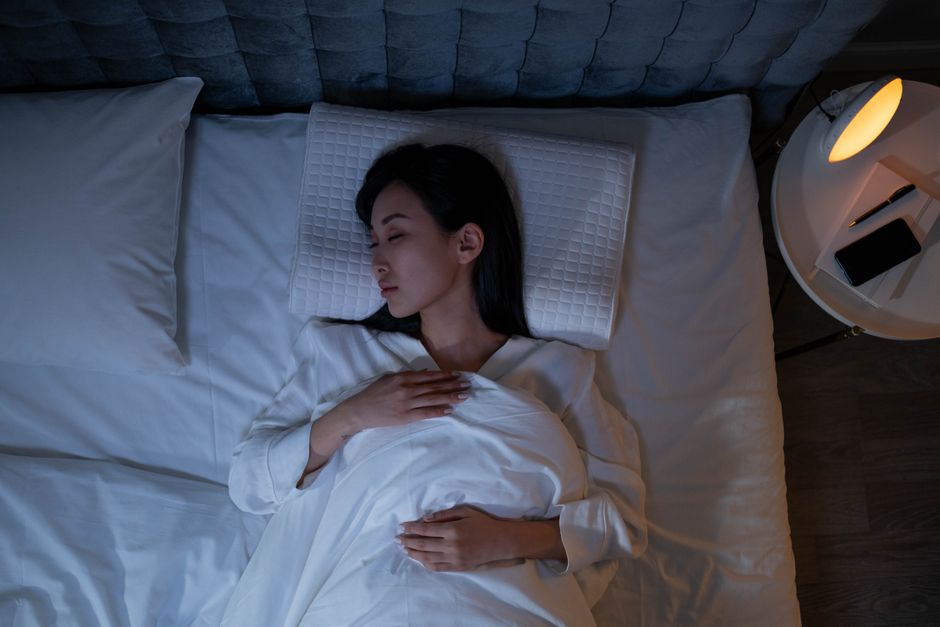
Your bedroom might be making you sick. Not dramatically, not in any way you'd notice on a Tuesday morning — but the accumulated effect of a too-warm room, blue-light bleed from a streetlamp on Milwaukee Avenue, and a mattress that's pushing year eleven is quietly wrecking your sleep architecture. And Chicago's wellness community is finally paying attention.
Sleep health has become one of the dominant conversations in urban wellness circles heading into the second half of 2026. Broader cultural anxiety around hormones, stress, and burnout — the kind of low-grade exhaustion that makes people question whether their job still means anything — has pushed sleep from a lifestyle footnote into a genuine public health priority. The Centers for Disease Control and Prevention has flagged for years that roughly one in three American adults doesn't get the recommended seven or more hours per night. In dense urban environments like Chicago, where noise, light pollution, and irregular work schedules compound the problem, that figure trends worse.
The science is not subtle. A 2023 study published in Sleep Medicine Reviews found that ambient room temperature above 67°F directly suppresses slow-wave sleep — the deepest, most restorative stage. The ideal sleep temperature range sits between 60 and 67°F. In a city that hits 90-degree July humidity with the reliability of the 151 Sheridan bus running late, that means active cooling, not just cracking a window.
Light is the other heavy hitter. The human circadian rhythm is governed by the suprachiasmatic nucleus, which reads light exposure to regulate melatonin production. Even low-level light — the orange glow that drifts off Lake Shore Drive at midnight, or the standby LED on a TV — can delay melatonin onset by 30 to 45 minutes, according to research from Northwestern University's Feinberg School of Medicine, which sits right here on the north side at Chicago Avenue and Fairbanks Court. That's not a trivial delay. Pushed back melatonin means pushed back sleep onset, shorter total sleep time, and a morning alarm that hits before your body is ready.
Noise matters, too. Chicago's 311 system logged more than 47,000 noise complaints in 2025, concentrated heavily in Wicker Park, Logan Square, and River North — all neighborhoods where young professionals are most likely to be lying awake at 1 a.m. wondering why they feel terrible.
The checklist isn't complicated, but it requires actual commitment. Temperature first: if your building's HVAC runs warm in summer, a portable air conditioner from a place like the Home Depot on Halsted Street in Lincoln Park runs $250 to $400 for a unit rated for a standard bedroom. That's a legitimate medical investment, not a luxury.
Blackout curtains are next. The Sleep Foundation recommends complete darkness, and Chicago's urban density makes that genuinely hard to achieve without intervention. Several local retailers stock quality options; the West Elm on Michigan Avenue carries room-darkening panels starting around $80 per panel. Cheaper alternatives exist at IKEA in Clybourn Corridor, where the MAJGULL blackout curtains run $29.99 a pair.
Screens out of the bedroom. This remains the most-repeated and least-followed piece of sleep advice in circulation. The American Academy of Sleep Medicine recommends no screens for at least 30 minutes before bed. If that's not realistic — and for most people working hybrid schedules in River North or the West Loop, it probably isn't — blue-light filtering glasses or phone night-mode settings offer partial mitigation.
Finally, sound. White noise machines have dropped significantly in price; the LectroFan Classic, consistently recommended by sleep clinicians, is available for around $50. Earplugs remain the lowest-friction, highest-return intervention available — 33 decibel NRR foam plugs cost under $10 at any Walgreens, including the 24-hour location on State Street in the Loop.
The Midwest Sleep Center, with locations in Lakeview and Orland Park, and Northwestern Medicine's sleep disorders program both offer formal evaluations for anyone whose problems extend beyond the environmental. For most Chicagoans, though, the bedroom audit is the right place to start — before assuming the problem is hormonal, pharmaceutical, or beyond fixing. Often it's just the temperature. Check the thermostat before you call a doctor. Then call a doctor anyway.

Wellness

Wellness

Wellness

Wellness
About this article
Published by The Daily Chicago
Spread the word
Daily brief
Free, in your inbox before 7am. Weekdays.
The Daily Network — local news across Australia